
Just being there for people - like Jesus
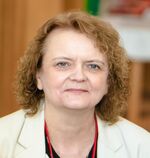
Bożena Daszuta, member of the Church Council of The United Methodist Church in Poland, was a guest at the Connexio Mission Talk on January 20, 2026. She talked about summer camps, the invitation from the Polish President and the growing fear of war. And she underlined that the church needs to become more authentic.
Bożena Daszuta is widowed, has two children and lives in Kielce, in the south of Poland. She teaches English, is a member of the Church Council of The United Methodist Church (UMC) in Poland, is treasurer of her own local church and is involved in a very popular ministry with children. In the Connexio Mission Talk, a one-hour Zoom meeting, she gave an exciting and personal insight into the issues facing society and the church. She was also able to give the participants food for thought for their own situations.
The UMC in Poland has been recognized by the state since 1925. "Especially after the Second World War, we were very socially committed," said Bożena Daszuta, "and I hope that we will do more of that again." But there was also exclusion: "There are still people who became Methodists and experienced neighbors throwing stones at them. Some had a really hard time at school as a child." Bożena Daszuta herself grew up Catholic and decided to join the UMC as a young woman. Her father only said that she was an adult and should make her own choice. But her mother was afraid: "You were born and raised Catholic. What will people say?"
Today it's different: "We don't ask about it, but most of the children who come to our big annual summer camp are Roman Catholic. People are more open and our community is known because of the camp." Bożena Daszuta was enthusiastic: "We started in 2007 with 16 children, now there are 400; only 20 of them are from our local churches and all the others are from the villages - even the authorities appreciate us. We support families who cannot afford the costs. All children should be able to have a good time." The church is also involved with therapeutic camps for people suffering from addiction and their families. And English-, Spanish- and Ukrainian-speaking congregations open their doors to people who are foreigners in Poland.
The local church in Kielce includes four people who have fled from Ukraine; two live in the church. "They belong to us. They are independent and have a job." Will they return? Bożena Daszuta weighs up the options: "One is a single mother with her daughter: they will stay. In the other family, the father can't leave Ukraine; his wife travels back and forth. They are waiting for the war to end. Perhaps, if the situation allows it, they will then return to Ukraine." Ukrainian refugees have been taken in by the church in several places. Some move on, for example to Germany. "We support them and they are allowed to stay until they have sorted out the administrative matters."
Poland borders Ukraine and Russia. Many people are worried that there could be war in Poland. "We're not paralyzed by fear, but it's in the back of our minds," said Bożena Daszuta. "There are people who lived through the Second World War. Others say: 'No, no, nothing will happen'. Many are building and buying apartments in Spain. But it's like this: The war is on our borders, on our doorstep."
In Poland, 90% of the population is Roman Catholic, 1-2% Protestant and around 1% Orthodox. In January 2026, as every year, a representation of the UMC in Poland was invited to the Polish President, together with all recognized Churches and other religious communities. However, many would leave the Roman Catholic Church, also because of numerous grievances - which also exist in other churches, according to Bożena Daszuta. "And people seem to be less interested. Other things, such as material prosperity, are more important." With the fall of communism around 1990, a hopeful development had begun: "There was freedom for people: the freedom to go where they want, to think what they want. But society strives to have more. Many may say to themselves: we don't need God."
All churches have to face up to these developments. "It has also become more difficult for us to keep people. Maybe it's our fault. We should be more authentic, be witnesses who are worthy of being called that," Bożena Daszuta said thoughtfully. Because people - and children and young people in particular - are looking for authenticity. "We shouldn't just preach on Sunday. We should be with people, stand by them when things go wrong, and pass on hope. We just have to be there. Just like Jesus was there for the people: he was there and listened to them and talked to them."
Author: Nicole Gutknecht, Connexio, Zurich (Switzerland)